
Acoustic Analyzer
Acoustic Analyzer (SX-NVA Acoustic Analyzer) is an advanced multi-channel sound acquisition and analysis device, available in both 4-channel and 8-channel configurations. It features an intuitive interactive interface that not only optimizes basic noise monitoring functions but also provides a wide range of analytical tools for professional users. This makes it suitable for various complex acoustic environments and measurement needs.
The acoustic analyzer excels not only in audio signal acquisition but also in high-precision vibration signal collection. Whether used for environmental noise monitoring, equipment fault diagnosis, or precision engineering measurements, this device can meet a variety of needs. By integrating multiple sensing technologies, the acoustic analyzer achieves more comprehensive signal capture and analysis, providing more reliable and accurate test data.
Core Technology Highlights
By integrating multiple sensing technologies, the Acoustic Analyzer achieves more comprehensive signal capture and analysis, providing more reliable and accurate test data.
Multi-Channel Support
The Acoustic Analyzer offers versatile multi-channel support, providing 4 or 8-channel BNC interface connections. It is suitable for various application scenarios and can flexibly accommodate different signal acquisition needs.
Customizable Settings
The device supports custom configurations via PLC, TCP, and other protocols, allowing users to personalize settings based on specific application needs, thereby enhancing the flexibility and practicality of the equipment.
Built-in Analyzer Software
The device comes with a variety of built-in analysis software, supporting customizable analysis functions. It allows users to quickly adjust and configure settings based on different analysis requirements, improving analytical efficiency (including AI algorithms for detecting abnormal sounds).
Ease of Use
The user interface is intuitively designed, making operation simple and flexible. This allows users to quickly get started and efficiently complete tasks, making it suitable for users of all skill levels.
High-Frequency Signal Analysis
The Acoustic Analyzer is suitable for multi-channel analysis of high-frequency signals, offering precise measurements and efficient data processing to meet the demanding requirements of advanced acoustic analysis.
Multiple External Interfaces
The Acoustic Analyzer is equipped with multiple external interfaces, supporting flexible connections with various devices and sensors.
The main functions of the acoustic analyzer
Supports Fast Fourier Transform (FFT) analysis, calculates the spectrum of sound signals in real time, and accurately analyzes different frequency components. Provides octave band analysis capabilities, suitable for environmental noise monitoring, mechanical vibration analysis and architectural acoustics applications. Supports 1/3 octave and 1/1 octave analysis settings, provides finer frequency resolution selection, adapts to different acoustic analysis needs, and ensures more accurate spectrum analysis results.
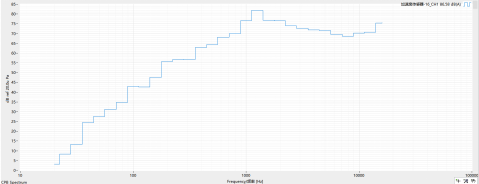
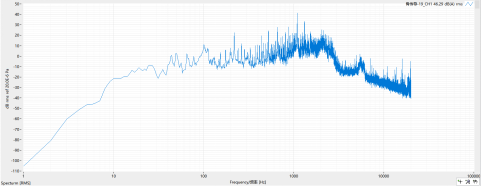
Accurately calculates sound pressure level (SPL) and provides real-time sound pressure level change curve to help users monitor changes in the sound environment.

Supports time-frequency analysis (Time-Frequency Analysis), such as short-time Fourier transform (STFT) and wavelet transform (Wavelet Transform), which can intuitively display the distribution of sound signals in time and frequency.

The acoustic analyzer supports the calculation of psychoacoustic characteristics, including loudness, sharpness, roughness and other indicators. These characteristics are used to evaluate the subjective perceptual properties of sound, helping users more fully understand the impact and perceived quality of sound.

Filtering is used to remove unwanted noise or interference from a signal, retaining the frequency components of interest. It can be performed through low-pass, high-pass, band-pass or band-stop filters, etc., and is widely used in signal processing, noise control, vibration analysis and other fields to improve the quality and accuracy of signals.
The acoustic analyzer also supports Order Analysis, a technology specifically used to analyze vibration signals of rotating machinery equipment. Through order analysis, the vibration frequency components of mechanical equipment at different rotational speeds can be identified, helping users quickly locate and diagnose possible equipment faults.
The acoustic analyzer is available in 4-channel and 8-channel configurations, supports simultaneous collection of multi-channel audio signals, and is suitable for multi-point monitoring and analysis of complex sound fields. This multi-channel configuration is ideal for precise acoustic studies in complex sound field environments, such as sound source localization and sound field reconstruction.
| Data transmission interface | USB interface | Supply voltage: 5V; |
| Bit depth | 24 bit | |
| Sampling rate | Multi-channel synchronization up to 100KHz | |
| Terminal configuration | ADC/IEPE | In ADC mode, the terminal does not have a constant current electrical signal and is suitable for sensors equipped with an IEPE constant current source or polarized power supply. In IEPE mode, the terminal will output 4mA constant current excitation (driving voltage: 22V~26V ) |
| ADC anti-aliasing filter frequency response | 0.2*Fs @ -3dB0.5*Fs @ -10dB | Fs, sampling rate. |
| Measuring range | ±10V | Maximum input safe voltage: ±200V |
The device integrates advanced machine learning and deep learning algorithms and is dedicated to the detection and identification of abnormal noises.
The acoustic analyzer integrates advanced communication functions, supports TCP communication modules and PLC control, and provides users with a variety of connection and control methods: whether it is remote data management or local automation control, the acoustic analyzer can meet the diverse needs of users. Help achieve more accurate and efficient acoustic analysis tasks.
The device is also equipped with a camera integration function that enables simultaneous acquisition and analysis of acoustic data and video data. Users can view live images in real time during the monitoring process, and combine sound signals with video information for multi-dimensional analysis.
Acoustic analyzer hardware configuration
| Processor | 12th Gen Intel(R) Core(TM) i3-12300T 2.30 GHz | Intel |
| Memory | 16G-DDR4 | Kingston |
| Motherboard | H610 | Colorful |
| Solid state | 2TB-NVME | Kingston PCIE4.0 |
| Earphone | 3.5mm stereo socket (audiometry channel one signal) | |
| Operating temperature range | Temperature: -10 ℃ ~ 50 ℃, humidity: 20% ~ 90% | |
| Output interface | 4 USB2.0, 3 USB3.0, wireless wifi, Bluetooth | |
| Fan | IIntel/Others | Original 1700 |
| Power supply | 300/500w | Full model |
Scenario application
Auto parts
The noise test box is mainly used to test the noise, vibration, NVH, etc. of automobile parts. Tested products include engines, car seat drives, displays, car actuators, air conditioning systems, etc. Through the noise test box, automobile manufacturers can carry out effective noise control and optimization during the design and development process, improving the overall quality and user experience of the vehicle.
3C electronics field
The noise test box is mainly used to test the noise, vibration, sound pressure level, etc. of 3C products. Tested products include smartphones, headphones, speakers, computer fans, tablets, micro motors, etc. Through the noise test box, 3C electronic product manufacturers can effectively monitor and control product noise to ensure their competitiveness in the market and user satisfaction.
Medical device
The noise test box is mainly used to test the noise, abnormal sound, sound quality, etc. of medical equipment. Products tested include ventilators, dental equipment, surgical machinery, monitors and more. With noise test chambers, medical device manufacturers can ensure that their products do not produce excessive noise when in use, thereby improving patient comfort and device reliability.
Home appliance field
Noise test boxes are mainly used to test noise, vibration, sound quality, etc. in the field of home appliances. Test products include air conditioners, vacuum cleaners, refrigerators, washing machines, etc. Through the noise test box, home appliance manufacturers can effectively control product noise to ensure their competitiveness in the market and user satisfaction.
 Chinese
  Thai
Thai